
How Much Does it Cost to Change a Car Battery in Canada?
Most Canadian drivers pay between $150 and $400 to replace a car battery, including the battery and labor. Small cars with basic lead-acid batteries are cheaper. Trucks, SUVs, or European cars with AGM batteries can cost more than $500. So when you ask how much it costs to replace a car battery, the honest answer depends on four things: the type of battery you have, your vehicle, who does the work, and a small fee that shops rarely mention up front.
This guide breaks down the entire bill so you know a fair price before you say yes.
What Your Car Battery Actually Does
Your 12V battery does two jobs. It sends a lot of power to crank the engine, and it keeps the lights, radio, heated seats, and dashboard running after the car starts.
The alternator keeps the battery charged while you drive. That system works well in the summer. It struggles in Canadian winters, because a lot more power is drawn when the cold starts, and short trips never give the alternator enough time to replenish what you’ve used.
This is why batteries here fade faster than the sticker suggests. In provinces with harsh winters, three to five years is a realistic lifespan. A quick check once a year when you change the oil will catch a weak battery before it can take you out.
Car Battery Types and What Each One Costs
The battery itself is the largest line item on your bill, and the type your car needs will determine the cost. You can’t choose freely here. Your owner’s manual will tell you what’s right for you.
- Lead-acid ($100–$150): The standard choice for most older and simpler vehicles. Proven, inexpensive, and almost completely recyclable.
- Enhanced Flooded (EFB) ($150–$250): Made for cars with auto stop-start systems. It handles more charge cycles than plain lead-acid.
- AGM ($150–$300, and up to $475 for larger sizes): Sealed, leak-proof, and made for vehicles loaded with electronics. It also handles cold weather and short trips better.
- Lithium-ion ($1,000+): Rare as a 12V battery. A handful of high-end models use them from the factory, and some drivers retrofit them for lighter weight and more cold-crank power.
In Canada, one number is more important than the rest: cold cranking amps (CCA). CCA measures how much current a new battery can deliver for 30 seconds at -18°C. Bigger engines require more CCA, and batteries with stronger CCA ratings tend to be more expensive for good reason.
What Real Canadian Drivers Pay, by Vehicle
Averages hide a lot. These sample prices for common battery sizes show how fast the number moves once you change the vehicle.
| Vehicle | Battery choice | Typical price |
| Subaru Impreza (size 35) | Budget lead-acid, 650 CCA | $100 |
| Subaru Impreza (size 35) | Branded AGM, 620 CCA | $325 |
| GMC Terrain V6 (size 48) | Branded lead-acid, 655 CCA | $195 |
| GMC Terrain V6 (size 48) | Branded AGM, 760 CCA | $295 |
| Ford F-150 V8 (size 94R) | Branded lead-acid, 790 CCA | $250 |
| Ford F-150 V8 (size 94R) | Premium AGM, 800 CCA | $475 |
| Honda Civic (size 51R) | Budget lead-acid, 500 CCA | $120 |
| Honda Civic (size 51R) | Branded AGM, 500 CCA | $280 |
| Toyota Corolla (size 35) | Standard lead-acid, 550 CCA | $125 |
| Toyota Corolla (size 35) | Premium AGM, 650 CCA | $300 |
| Toyota RAV4 (size 35) | Branded lead-acid, 600 CCA | $160 |
| Toyota RAV4 (size 35) | Branded AGM, 650 CCA | $325 |
| Honda CR-V (size 51R) | Standard lead-acid, 500 CCA | $140 |
| Honda CR-V (size 51R) | Premium AGM, 650 CCA | $320 |
| Mazda CX-5 (size 35) | Branded lead-acid, 650 CCA | $170 |
| Mazda CX-5 (size 35) | Branded AGM, 650 CCA | $310 |
| Ford Escape (size 48) | Standard lead-acid, 650 CCA | $175 |
| Ford Escape (size 48) | Premium AGM, 760 CCA | $325 |
| Chevrolet Silverado V8 (size 94R) | Branded lead-acid, 800 CCA | $250 |
| Chevrolet Silverado V8 (size 94R) | Premium AGM, 850 CCA | $475 |
| Ram 1500 V8 (size 94R) | Branded lead-acid, 800 CCA | $260 |
| Ram 1500 V8 (size 94R) | Premium AGM, 850 CCA | $485 |
The pattern is simple. Move from a compact car to a V8 truck and the battery price roughly doubles. Move from budget lead-acid to premium AGM and it doubles again.
Where the Rest of the Money Goes
The battery is just one part of the bill. A full replacement adds a few more charges, and mobile services list them clearly:
- Battery: $130 to $400
- Delivery: $30 to $60
- Installation: $60 to $80
Add that up, and the cost of a full mobile car battery replacement typically starts around $250. That includes a technician driving to your driveway or office parking lot, replacing the battery on site, and hauling the old battery away.
Regular garages often charge less for labor but expect you to get the car there, which means a tow or jump-start if the battery is already flat. Once you add the $100 tow, the mobile option often wins out on price. This is the void that mobile providers like Tabangi Service fill.
The Small Fees Nobody Warns You About
People are shocked to see two charges on the counter.
- Main charge: Shops add about $20 to each new battery so you can return the old one to be rebuilt. Bring in your old battery and they’ll usually forgive it. Return it later and they’ll give it back.
- Recycling fee: If you decide to keep the old battery instead of throwing it away, expect a one-time fee of about $18. Most drivers just let the shop recycle it and pay nothing.
Warranty terms are just as important as price. A good premium battery has about six years of coverage, broken down into about a three-year free-replacement period and then a prorated period. A battery that costs $60 more but has double the warranty is usually the cheapest battery over its lifetime.
Why Newer Cars Cost More to Change
Here’s a part that most price guides leave out, and it catches new vehicle owners unaware.
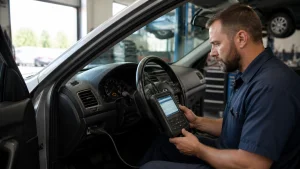
Modern cars keep an eye on their batteries. The charging system tracks the age and health of the battery, then adjusts how quickly it charges. When you fit a new battery, someone has to tell the car about it. That step is called battery registration or battery coding, and it requires a scan tool.
Leave it alone and the car will continue to charge as if the old, worn-out battery was still in place. The new battery will wear out prematurely, and you’ll be buying another battery years ahead of schedule.
Vehicle choice also adds to the cost. Hondas often take straight lead-acid batteries. BMWs typically require larger H7 AGM units, and the proper removal and fitting steps come straight from the manufacturer’s own process. It follows the OEM spec rather than taking guesswork from any technician who’s willing to pay for it.
What to ask before booking: “Does my car need a battery registration, and is it included in the quote?” The answer tells you a lot about the shop.
Test Before You Buy: Battery or Alternator?
A new battery fixes nothing if the alternator is the real problem, and drivers pay for that mistake all the time. The two faults feel almost identical, but one clue separates them:
- Failing battery: the engine resists starting, then runs fine once it catches.
- Failing alternator: the car starts after a jump, then dies again soon after, because nothing is refilling the battery.
A mechanic settles the question in minutes. Spending $30 on a proper diagnosis beats spending $300 on the wrong part.
What a Proper Battery Check Covers
A real charging system inspection goes well beyond a voltage reading. A technician checks:
- the condition of the terminals and the battery case
- electrolyte levels, on batteries that allow it
- the current the battery actually delivers
- alternator belts for wear and tension
- the connections and mounting of the battery and starter
This last point is more important than it sounds. A battery in a tray will die quickly from vibration alone. Many shops, including Tabangi Service, run this check for free or for a small fee, and it often saves you the cost of a battery you didn’t need yet. Book one once your battery is past its third birthday.
Hybrid and Electric Cars Play by Different Rules
All of the above covers a 12V battery. The high-voltage pack in a hybrid or EV is an entirely separate purchase.
Hybrid battery replacement in Canada runs from $2,000 to $8,000, and most common models fall in the lower-mid range with an independent specialist. A Toyota Prius often falls between $1,000 and $2,600. A Ford Fusion or Escape hybrid runs around $3,000 to $6,000. Dealerships usually offer prices at the higher end.
Check your warranty before panicking. Toyota Canada covers hybrid batteries for 10 years or 240,000 km on 2020 and newer models, and 8 years or 160,000 km on older models. Honda Canada covers its hybrid system for 8 years or 160,000 km. That coverage extends to the vehicle, not just the first owner.
One firm rule: Don’t try to do this yourself. High-voltage packs are downright dangerous without the proper training, tools, and safety equipment.
Smart Ways to Pay Less
- Test first, then buy: A free test will tell you if you need a battery.
- Match the CCA, don’t overdo it: Paying for power never wastes money on your engine.
- Compare warranties, not just price: Six years of coverage will save you over $40.
- Return old batteries: This is what saves you big charges.
- Clean your terminals twice a year: White-green corrosion chokes power flow and shortens battery life for free.
The Bottom Line
The standard cost to replace a car battery in Canada is $150 to $400, around $500 for a large AGM battery in a truck or European car, and $2,000 or more for a hybrid pack. Add about $20 for a core charge if you don’t return the old battery.
The best way to save money is simple. Get your battery tested before you replace it, make sure the alternator is healthy, ask if your car needs to be registered, and compare the sticker price to the warranty price. If your battery is past its third winter, book a check now, not in January. A team like Tabangi Service can test it, tell you honestly whether it needs to be replaced, and handle the swap wherever your car sits.
Frequently Asked Questions
How long does a car battery last in Canada?
Three to five years in most provinces, and about three years where winters are harsh. Frequent cold starts, short trips, and heavy use of heated seats and defrosters shorten this period. Test the battery every year after it turns three years old so that failure never surprises you.
Can I replace my car battery myself?
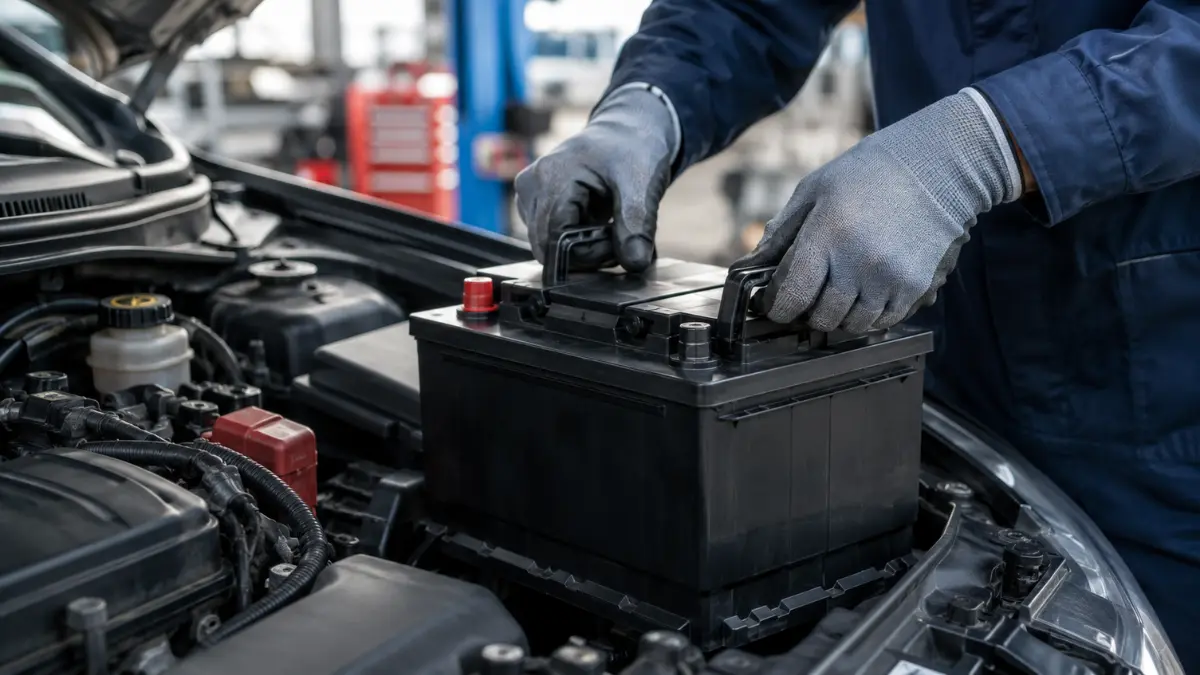
Yes, on most older vehicles. This job requires gloves, basic tools, and care, as batteries are heavy and contain corrosive acid. Newer vehicles make it more complicated, as they require battery registration with a scan tool. Check your manual first, then decide.
How long does the job take?
About an hour for a standard car, and often much less. A mobile technician can usually complete the job in your driveway in 20 to 30 minutes. Vehicles with batteries under the seat or in the trunk take longer, and hybrid packs take three to five hours.
Does a jump start mean I need a new battery?
Not always. A single jump after the lights come on or in a deep freeze proves nothing. Repeated jumps do nothing. If the battery is consistently dying or refusing to charge, schedule a test to find out if the battery, alternator, or parasitic drain is faulty.
Do I pay extra for a battery in an SUV or truck?
Yes. Bigger engines require larger batteries with higher cold cranking amps, and they cost more. A compact car battery can run $100 to $150, while a V8 truck battery can run $250 to $475, depending on whether you choose lead-acid or premium AGM.