
Car Warning Signs Every Mississauga Driver Should Know: Symptoms, Diagnostics & When to See a Mechanic
Car warning signs are the sounds, smells, dashboard lights, leaks, and handling changes that tell you a repair is coming before your vehicle leaves you stranded. Most start small and get worse, so catching them early can keep a $200 fix from turning into a $2,000 one. This guide covers the car warning signs every Mississauga driver should know, what each symptom points to, how to run a few checks yourself, and exactly when to stop driving and book a mechanic.
Your car almost always warns you first, whether it is a light on the dash heading down Hurontario Street, a grind at a red light, or a new smell on the drive home. Drivers who act early spend far less than those who wait, and they stay safer on salty Mississauga winter roads. Each sign below is grouped by what you can see, hear, smell, and feel, so you can tell a quick fix from an emergency.
What Counts as a Car Warning Sign?
A car warning sign is any change from how your vehicle normally looks, sounds, smells, or drives. Your car communicates through five channels, and good diagnostics means watching all of them.
- Dashboard lights tell you when a sensor or system has flagged a problem.
- Sounds like grinding, squealing, ticking, or rumbling point to worn or loose parts.
- Smells like sweet, burning, or rotten egg each maps to a specific system.
- Leaks and puddles reveal fluid escaping where it should be sealed.
- Feel and performance changes, like a soft pedal, a vibration, or slow acceleration, show a part is failing under load.
Dashboard Warning Lights: Red Means Stop, Amber Means Check
The colour of a dashboard light is your fastest clue to how serious a problem is.
| Light colour | What it usually means | What to do |
| Red | A safety system has failed, or a critical level is dangerous: brakes, engine temperature, oil pressure, or charging | Pull over safely as soon as you can and get help |
| Amber or yellow | A system needs attention soon but is not an instant emergency: check engine, ABS, tire pressure, or traction control | Book a diagnostic within days, not weeks |
| Green or blue | Information only: headlights, high beams, cruise control, turn signals | No action needed |
A flashing check engine light is the exception. A steady amber light means investigate soon, but a flashing one signals a misfire that can wreck your catalytic converter, so treat it like a red light.
Sounds, Smells, and Leaks You Should Never Ignore
Long before a light comes on, your senses catch the first warning. These are the ones Mississauga drivers hear about most.
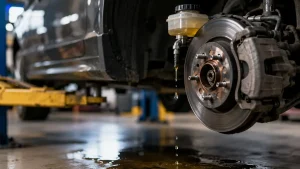
- Grinding or squealing when braking means worn pads or rotors. Metal on metal is a safety issue, not a noise to live with.
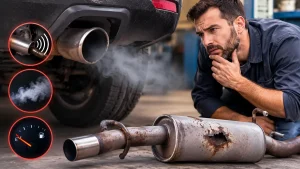
- A deep rumble or drone from underneath points to an exhaust leak or a rusted muffler, and it can let fumes into the cabin.
- A sweet, syrupy smell often means a coolant leak. Paired with a heater blowing cold air or a foggy windshield, it points to a cooling system issue.
- A rotten egg smell usually means a failing catalytic converter or an upstream engine fault.
- A burning smell can be oil on a hot surface, a slipping belt, or overheating brakes.
- A puddle under the car is a fluid warning. Light and oily is likely brake fluid, sweet and coloured is coolant, dark and slick is engine oil.
If you smell exhaust inside the cabin, roll the windows down and get it checked immediately. Vehicle exhaust contains carbon monoxide, a gas with no colour, taste, or smell that is dangerous to breathe.
Match the Symptom to the Likely Cause
This reference maps common car warning signs to the system behind them and how fast to act.
| Warning sign | What it often points to | How urgent |
| Grinding or squealing brakes | Worn brake pads or rotors | High; brakes are safety critical |
| Soft or sinking pedal, light oily puddle | Brake fluid leak | Stop driving and have it towed |
| Sweet smell, cold heater, foggy glass | Coolant loss or heater core issue | Medium to high, check before it overheats |
| Deep rumble or drone underneath | Exhaust leak or failing muffler | Medium, plus a cabin fume risk |
| Blue, white, or black exhaust smoke | Burning oil, burning coolant, or a rich fuel mix | Diagnose soon |
| Vibration through the wheel or seat | Tire, brake, or suspension wear | Medium, worsens over time |
Several of these deserve a closer read. If your pedal feels spongy or you spot a light puddle, our guide on a brake fluid leak walks through the causes and the fix. Cold air with a sweet smell is a classic cooling system warning, and a new rumble underneath is your cue to have the exhaust and muffler inspected before rust spreads.
How to Check Your Car at Home in Five Minutes
You do not need tools to catch problems early. Run these five checks monthly, and any time a new warning sign appears.
- Check your fluids cold. With the engine off and cool, look at the coolant, brake, and oil levels. Anything below the minimum line is a red flag.
- Watch the temperature gauge. On a 10 to 15 minute drive it should settle near the middle. A needle stuck low or climbing high both mean trouble.
- Look underneath. Check for puddles or drips, and note the colour of anything you find.
- Use your nose. Sweet points to coolant, rotten egg to the catalytic converter, burning to oil or a belt.
- Listen at idle and low speed. Grinding, ticking, and rumbling that you do not normally hear are all worth a professional look.
Snap a photo of anything unusual that you cannot fully see from outside.
When to See a Mechanic Right Away
Some warning signs mean book an appointment this week. Others mean stop the car now.
Stop driving and get help immediately if you notice: a red dashboard light, a brake pedal that sinks toward the floor, steam or smoke from under the hood, the temperature gauge in the red, or the smell of exhaust inside the cabin.
Book a diagnostic within a few days if you notice: a steady amber light, a new noise, a small leak, a drop in fuel economy, or a new vibration. Waiting rarely makes them cheaper.
One more note for our climate: if your defroster cannot clear frost or fog, you cannot legally drive with an obstructed windshield under Ontario’s Highway Traffic Act, and a cold heater is often the first sign of a bigger cooling system problem.
Why Mississauga Winters Make Warning Signs Worse
Our climate is hard on the exact parts that trigger warning signs. Mississauga sees well over 100 days a year at or below freezing, and the salt trucks that keep the 403 and QEW clear coat your undercarriage all season.
Road salt corrodes brake lines, fuel lines, and exhaust from the outside in. Freeze-thaw cycles crack hoses and gaskets that were fine in the fall. And short winter trips never let the engine fully warm, so moisture and wear build up fast.
Coolant suffers too. If yours is more than five years old, its corrosion inhibitors have worn out, which can cause heater cores to clog and thermostats to fail. A yearly heating and cooling inspection before winter is one of the best value checks in the GTA.
How Tabangi Service Centre Helps Mississauga Drivers
At Tabangi Service Centre, our NAPA AUTOPRO certified technicians have diagnosed car warning signs in Mississauga for over 25 years. We use dealer-level scan tools and pressure testers to find the actual cause, not guess and swap parts.
Our approach is simple. We show you what we find, explain what is urgent and what can wait, and give you upfront pricing before any work starts. Most repairs are done the same day and backed by the nationwide NAPA Peace of Mind Warranty for 24 months or 40,000 km.
We work on all makes and models from our shop at 1074 Westport Crescent, serving Cooksville, Streetsville, Erin Mills, Meadowvale, Dixie, and the surrounding communities. If a warning light, noise, or smell has you worried anywhere in Mississauga, book an inspection or call (905) 670-8100, and we will get you a clear answer.
Conclusion
Car warning signs are your vehicle asking for help while the fix is still small. A light, a noise, a smell, or a puddle is all worth acting on, and the symptom tells you how fast to move.
Run the five-minute check regularly, treat every red light and brake or coolant warning as urgent, and never let a fume smell in the cabin slide. Booking an inspection at the first sign, not the tenth, is the cheapest safety upgrade your car will ever get.
Frequently Asked Questions
What are the most common car warning signs?
The most common car warning signs are dashboard lights, brake grinding or squealing, a sweet or burning smell, a rumble from underneath, fluid puddles, and vibration or slow acceleration. Each maps to a specific system, so noting exactly what you see, hear, or smell helps a technician diagnose it faster.
Which dashboard warning lights mean I should stop driving?
Red lights mean stop as soon as it is safe. The brake, engine temperature, oil pressure, and charging system lights all fall here, as does a flashing check engine light. These signal a critical system failure or a dangerous fluid level, and driving on can cause major damage.
Can I keep driving with a warning light on?
It depends on the colour. A steady amber light usually lets you drive to a shop within a few days. A red light or a flashing check engine light means stop and get help now. When in doubt, treat any light you do not recognise as urgent and have it scanned.
How much does a car diagnostic cost in Mississauga?
A basic diagnostic scan is inexpensive and often applied toward the repair. From there, cost depends on the fault. A thermostat or coolant repair often runs $150 to $300, while larger jobs like a heater core cost more. A written estimate before work begins keeps the price clear.
Why does my car make a noise only when I brake or turn?
Noise that appears only when braking usually means worn pads or rotors. Noise that shows up when turning often points to a suspension, wheel bearing, or CV joint issue. Both are wear items that get worse and louder over time, so an inspection now prevents a bigger repair later.
How often should I get my car inspected?
Have your vehicle inspected at least once a year, and ideally before winter in Mississauga. Book one sooner any time a warning light appears, a new noise or smell starts, or the temperature gauge behaves oddly. Road salt and freeze-thaw cycles make regular inspections more important here than in warmer regions.