
Exhaust & Muffler Warning Signs: A Dixie Mississauga Driver’s Guide
Your car talks to you. When something goes wrong with your exhaust system, it doesn’t keep quiet about it. It makes a loud noise, smells bad, or the engine runs poorly. Many Dixie Mississauga drivers ignore these small signs until the problem becomes a bigger one and the repair bill increases with it.
This guide will tell you about the specific warning signs that indicate a faulty muffler or exhaust system. It will also show you how to check your car at home, what happens if you wait too long, and how much a muffler repair or exhaust repair typically costs. Finally, you know exactly when to book a muffler repair in Dixie Mississauga before a small problem becomes expensive.
What Is Your Car’s Exhaust System?
Before learning the warning signs, it helps to know what the exhaust system actually does. Your engine burns fuel to make power, and that process creates hot gases. The exhaust system safely removes these gases from the car.
The system starts at the engine’s exhaust manifold, which collects gases from each cylinder. These gases then pass into a catalytic converter, which converts harmful gases into safer gases. From there, the gases travel through metal pipes to the muffler and resonator, which muffle the loud engine noise. Finally, the gases leave the car through the tailpipe.
Each part works with the other. If one part fails, such as a cracked pipe or a rusty muffler, the entire system struggles to do its job. That’s why a small leak never stays small for long.
Six Warning Signs Your Muffler or Exhaust Needs Attention
Your car gives you clear signs when the exhaust system is starting to fail. Here are six signs every Dixie Mississauga driver needs to know.
1. A Loud or Rumbling Noise Coming from Under the Car
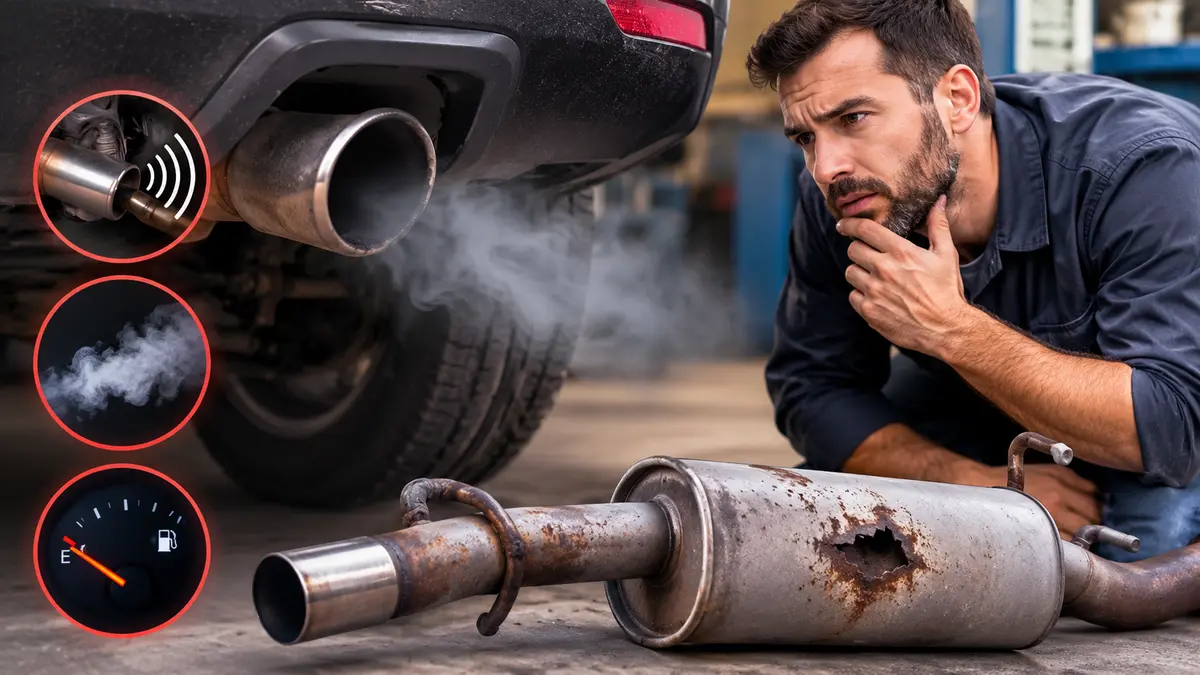
A healthy muffler keeps your car quiet. When the muffler wears out, the sound waves escape before they can be silenced, and you hear a deep, rumbling or roaring sound. You may also notice a new rattle or hiss coming from the rear of the car.
This noise usually starts out small and gets louder over the next few weeks. If your car suddenly sounds like a very old, worn-out vehicle, the muffler is often the cause.
2. You Smell Smoke Inside the Cabin
This sign is the most serious on this list. If you smell exhaust fumes inside your car, it means that there is a gas leak somewhere before the tailpipe, and some of that gas may be carbon monoxide. Carbon monoxide has no color and does not have a strong odor, so the smell you notice usually comes from other gases leaking with it.
Inhaling these fumes can be dangerous to your health, especially on long drives. If you notice this smell, roll down your windows immediately and have your car checked as soon as possible. Don’t wait for the smell to go away on its own, because it won’t go away.
3. Your Catalytic Converter is Working
The catalytic converter cleans the gases before they leave your car. When it fails, it usually gives off a strong, rotten egg smell. This smell is caused by the sulfur in the fuel not being converted properly.
Along with the smell, you may notice your car slowing down more slowly than usual or your check engine light coming on. A failing catalytic converter is often caused by a different problem, such as a worn spark plug or faulty sensor, so proper inspection helps find the real cause rather than just replacing parts.
4. Rust Holes, Not Just Drain Holes
Every muffler has small drain holes made by the manufacturer. This allows condensation to escape and is completely normal. The problem starts when rust eats away at the metal and creates holes in places that should remain solid.
Salt, moisture, and road grime accelerate this corrosion process, especially in cold, wet weather. Rust holes change the shape and sound of your exhaust stream, and they get bigger over time. If you see reddish-brown metal or a hole with rough, jagged edges, that’s rust damage, not a drain hole.
5. Water Dripping or Hanging in the Muffler
It’s normal for a little water to drip from your tailpipe after you start your car, as it’s just condensation. Heavy or constant dripping is not normal, and often means something is breaking inside the muffler.
You should also check to see if the muffler hangs lower than usual or doesn’t move when the car is running. This usually means that the hanger or bracket is broken or corroded. A loose muffler can scratch the road, cause further damage, or even fall off while driving.
6. Poor Acceleration and Increased Fuel Costs
When the exhaust system is blocked or damaged, gases can’t escape properly. This creates backpressure, which forces your engine to work harder than it should. You’ll notice that your car feels slower to accelerate, especially when merging or climbing hills.
At the same time, your fuel efficiency will generally decrease. Your engine burns more fuel to make up for the lost power, so you’ll end up paying more at the pump for the miles you drive each week. Even a small loss of ten percent in efficiency over the course of a month of regular driving adds up quickly.
How to Check Your Exhaust at Home
You don’t need to be a mechanic to spot early exhaust problems. Follow these simple steps at home before booking a professional muffler repair.
First, park your car on level ground and let the engine cool completely so you don’t touch any hot metal. Walk around the car and look at the tailpipe. Check that it’s sitting straight, and there’s no heavy black soot around the opening. Next, look at the muffler at the back of the car. Look for rust spots, holes, cracks, or broken hangers. Then follow the pipes behind the muffler and look for dents, wet patches, or loose joints. Check each connection point, clamp, and flange for rust buildup or black marks, as these often indicate leaks. Also look at the heat shields, and listen for loose metal rattling when you tap them gently. Finally, start the engine while the car is parked and listen carefully for hissing, rattling, or ticking noises that you don’t normally hear.
If you notice any of these signs, take a photo and bring your car inside so a technician can take a closer look, as some damage is in places you can’t see from the outside.
What Happens When You Ignore These Signs
Putting off exhaust repairs won’t save you money in the long run. A small leak or small hole in the rust will always get bigger, and the longer you drive, the bigger it will get, making a simple repair more expensive in the future.
Ignoring these signs also poses real safety risks. A carbon monoxide leak in the cabin can make you dizzy or feel unwell without warning. Loud exhaust can also violate local noise regulations, and driving with high emissions can cause inspection failures. In addition, a damaged exhaust system reduces the resale value of your car, as buyers or inspectors notice these problems quickly.
The good news is that most of these problems are easy to prevent. Wash the underside of your car regularly to clean off road salt and dirt. Try to avoid too many short trips, as your exhaust needs time to warm up and burn off moisture completely. Have your exhaust checked during regular maintenance visits, and drive carefully over potholes, curbs, and rough roads when possible.
What’s Included in a Muffler or Exhaust Repair?
Proper muffler repair involves more than just replacing one part. A good shop will inspect the entire exhaust path, not just the noisy part. This typically includes muffler replacement, catalytic converter testing, manifold inspection, and inspection of flex pipes, resonators, hangers, and oxygen sensors.
At Tabangi Service, the team inspects the entire exhaust system and gives you a written quote before any work begins, so you always know the cost of the exhaust repair up front. Many repairs, including muffler and exhaust work, are completed the same day for Dixie Mississauga drivers who need to get their cars back on the road quickly.
Benefits of Fixing Exhaust Problems Early
Fixing exhaust problems as soon as they appear has more benefits than most drivers realize. Your car runs quieter and smoother, and your engine doesn’t have to work as hard, which helps improve your fuel efficiency. You also protect your health and the health of your passengers by preventing harmful fumes from building up inside the cabin.
The initial repair costs are also lower, as a small leak or a single rust spot in the pipe is much cheaper than a complete muffler replacement. Your car also retains its value better, and you can avoid the stress of a sudden breakdown or a failed inspection. Staying ahead of these small signs means fewer major problems later.
Conclusion
Your exhaust system may not be visible underneath your car, but it plays a big role in how your car sounds, drives, and protects you. Loud noises, bad smells, rust holes, and poor acceleration are nothing to be ashamed of. This is your chance to get help for your car before a minor problem becomes costly.
If you notice any of these six signs, don’t wait. Book an appointment with Muffler Repair Dixie Mississauga and let a trained technician take a proper look. Tabangi Service offers honest inspections and clear, upfront pricing, so you always know what your car needs and why. Taking care of minor exhaust problems today keeps your drive quiet, safe, and more affordable tomorrow, and Tabangi Service is ready to help when you need it.
Frequently Asked Questions
How much does an exhaust repair typically cost?
The cost of an exhaust repair depends on the part that needs to be repaired. A small pipe leak or loose hanger will cost much less than a complete muffler or catalytic converter replacement. Getting a written quote before starting any work will help you understand the exact cost.
Is it safe to drive with a bad muffler?
Driving with a bad muffler for long trips is not safe. It allows harmful fumes to enter the cabin, can reduce your engine’s performance, and can lead to major repairs. It’s best to have it checked as soon as you notice a change in sound or odor.
How long do mufflers typically last?
Mufflers typically last for several years, but corrosion, road salt, and rough roads can shorten their life. Regular washing and early inspection can help your muffler last longer.
Can I drive my car if I smell exhaust fumes inside?
If you smell smoke inside the cabin, you should avoid driving for long distances. Roll down your windows for fresh air and have your exhaust system inspected immediately, as this smell often indicates a leak near the cabin floor.
Do all rust holes in the muffler need to be repaired?
No. Small drain holes that form in the muffler are normal and allow condensation to escape. Rust holes that eat away at the metal change size and require repair as they grow larger over time.