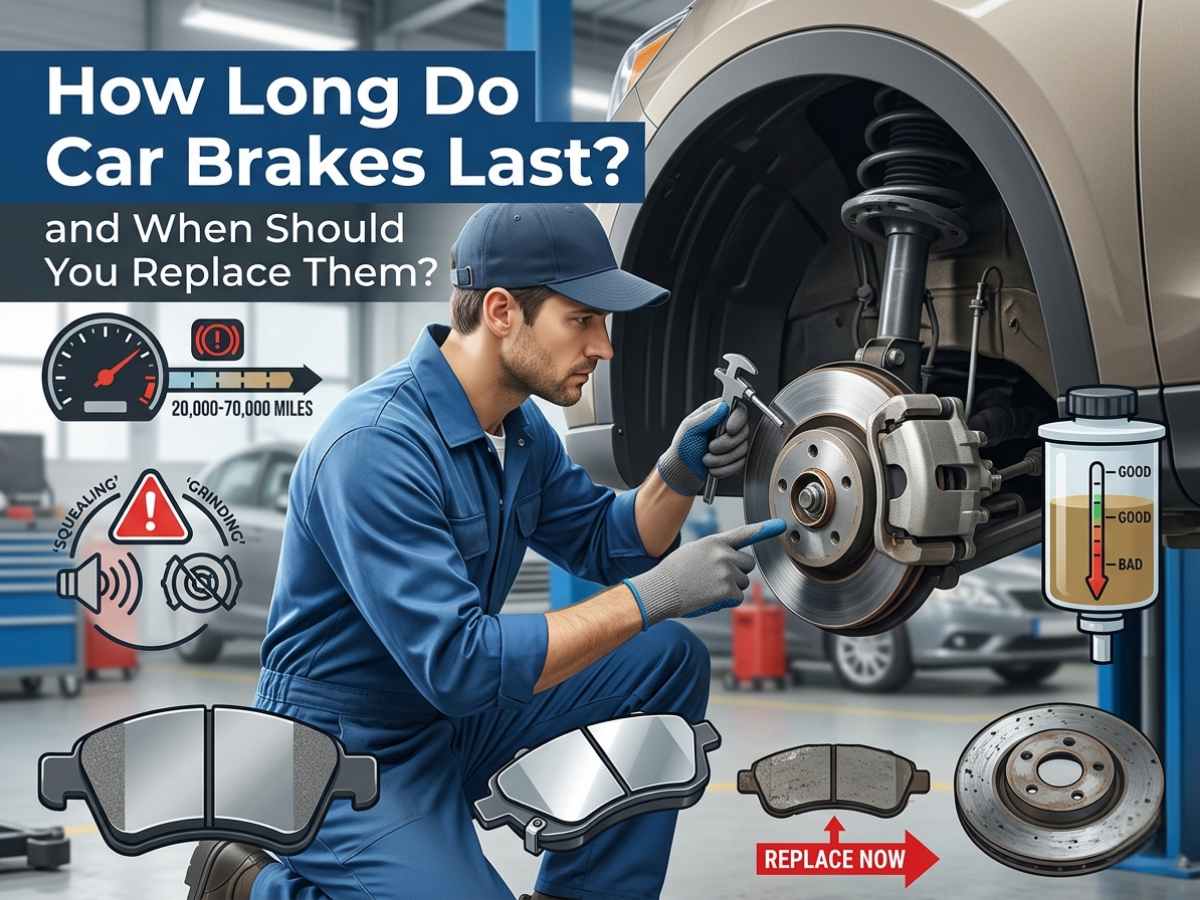
How Long Do Car Brakes Last and When Should You Replace Them?
You hear a faint squeal when you press the brake pedal. Is it urgent? Can it wait until next month? Most drivers have been in that exact spot, not sure whether to book an appointment or keep driving.
Here is the straight answer: how long car brakes last depends on your driving habits, your vehicle, and the type of brake pads it has. Most brake pads last somewhere between 30,000 and 70,000 miles. That is a wide range, and this post will help you figure out where your brakes likely fall.
We will cover how long brake pads and rotors actually last, what speeds up wear, the warning signs you should never ignore, and what brake pad replacement looks like in terms of time and cost. Whether you drive through Mississauga rush hour every day or rack up long highway kilometres on the 401, this guide is built for Canadian drivers.
| Brake Component | Average Lifespan | Canadian Driving Note |
| Brake Pads (city driving) | 25,000–40,000 miles | Stop-and-go on Hurontario or Eglinton accelerates wear fast |
| Brake Pads (mixed driving) | 40,000–60,000 miles | Typical for GTA commuters combining city and highway |
| Brake Pads (highway driving) | 60,000–70,000+ miles | Highway 401 or 403 long-distance drivers |
| Brake Rotors | 50,000–70,000 miles | Winter salt and road spray can shorten this significantly |
| Brake Fluid Flush | Every 2 years | Moisture from Canadian winters degrades fluid faster |
| Brake Inspection | Every 12,000 miles or 1 year | Pre-winter check strongly recommended in Ontario |
How Long Do Brake Pads Last on Average?
Most drivers can expect their brake pads to last between 30,000 and 70,000 miles. Premium ceramic pads sometimes push past 80,000 miles under the right conditions.
In a city like Mississauga, though, that upper range is harder to hit. Stop-and-go traffic on Hurontario Street, Dixie Road, and the QEW interchange puts real stress on your brakes daily. A driver doing back-to-back city stops burns through pads considerably faster than someone logging steady kilometres on the 401 or 407.
How long brake pads last is not a fixed number. It shifts based on how, where, and what you drive. Think of the mileage figures as a starting point, not a guarantee.
What Affects How Long Brakes Last?
Several things work together to either protect or shorten your brake life, and Canadian conditions add a few extra factors worth knowing.
Driving habits are the biggest one. Frequent hard stops, heavy traffic, and aggressive braking chew through pads faster than anything else. If you tend to leave a gap and coast before braking, your pads will thank you.
Brake pad material matters more than most people realize. Organic pads are quieter but wear faster. Semi-metallic pads handle heat better and last longer. Ceramic pads offer the best combination of longevity and everyday performance, though they cost more upfront.
Vehicle weight plays a role, too. Stopping a heavy SUV or truck takes more force than stopping a compact car, which puts more stress on every brake component. Given how many crossovers, pickups, and SUVs are on the roads in Mississauga, this is worth factoring in.
Terrain matters even in flat areas. The on-ramp and off-ramp braking on busy interchanges like the 403/QEW split adds up over thousands of trips.
Winter driving is a big one for Ontario drivers. Driving on salted roads, braking on ice, and navigating slushy conditions all wear brakes differently than dry summer driving. Salt and road spray also accelerate rotor corrosion during the colder months.
Brake fluid condition is the most overlooked factor. Canadian winters introduce more moisture into the brake system more quickly than warm climates do. Old or contaminated fluid lowers its boiling point and can affect braking performance while accelerating corrosion inside the callipers and lines.
How Long Do Brake Rotors Last?
Rotors typically last 50,000 to 70,000 miles, so they often outlast a full set of pads. But they do wear down and have a minimum thickness rating. Once a rotor drops below that spec, it needs to be replaced, not resurfaced.
For drivers in Mississauga and across the GTA, winter road salt is a genuine concern. Surface rust on rotors is normal after a vehicle sits overnight, and it usually clears after a few stops. But heavy corrosion from repeated salt exposure can damage rotor surfaces over time, shortening their useful life.
Signs your rotors are failing include a vibration or pulsing feeling in the brake pedal, visible grooves or scoring on the surface, or the vehicle pulling to one side during braking.
A good rule of thumb: have your rotors inspected every time you change your brake pads. A shop can measure thickness and check for warping in a few minutes.
Warning Signs: It Is Time for Brake Pad Replacement
Squealing or squeaking is usually the wear indicator built into the pad doing its job. It is designed to get your attention. Do not ignore it.
Grinding noise means the pad is gone, and metal is contacting metal. Book an appointment immediately.
Longer stopping distances mean the pads are getting thin and losing grip. If your car feels less responsive than it used to, trust that feeling, especially heading into an Ontario winter when stopping power matters most.
A soft or spongy brake pedal can indicate worn pads or a brake fluid issue. Either way, it needs attention before the snow season.
A car pulling to one side during braking usually means uneven pad wear or a stuck calliper.
On some vehicles, the dashboard brake warning light signals low pad thickness via an electronic sensor.
A visual check of the wheel spokes is something you can do yourself. If the pad looks thinner than a quarter inch, it is time to replace the brake pad.
If you hear grinding, do not wait. Driving on worn-out pads damages rotors and turns a $150 pad job into a $400+ repair.
How Often Should You Have Your Brakes Inspected?
Every 12,000 miles or once a year is the standard recommendation. In Ontario, the best time to schedule that inspection is in the fall, before winter hits, so you know exactly what condition your brakes are in before driving on snow and ice.
Most auto repair shops in Mississauga include a basic brake check during a tire rotation, often at no extra charge. If you are switching to winter tires in October or November, ask them to look at your brake pads and rotors at the same time.
Brake Pad Replacement: What to Expect
Brake pad replacement on one axle typically takes one to two hours. Cost runs $100 to $300 per axle for pads alone, with the total going higher if rotors need to be replaced at the same time.
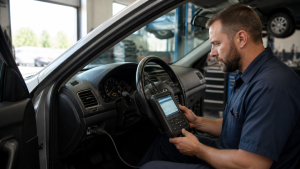
A good shop will inspect callipers, hardware, rotor thickness, and brake fluid condition, not just swap the pads. If they are not doing that, ask why.
DIY is possible for mechanically comfortable drivers, but brakes are not the place to guess. For most people in Mississauga, professional replacement is worth it for the peace of mind and the safety check that comes with it.
Tips to Make Your Brakes Last Longer
Brake earlier and let the car coast before pressing the pedal. Avoid riding the brakes on highway off-ramps and use engine braking where possible. Remove unnecessary weight from the vehicle. Flush your brake fluid every two years, or more often if you drive through heavy Ontario winters. And choose quality pads. Cheap pads wear faster and usually cost more over time.
Wrapping Up
Most brake pads last 30,000 to 70,000 miles, but your driving habits, vehicle type, and road conditions will push that number up or down. For drivers in Mississauga and the GTA, city traffic, highway commuting, and winter road salt all play a real role in how quickly brakes wear.
The worst thing you can do is ignore the warning signs. Squealing is a heads-up. Grinding is a problem. Waiting too long turns a straightforward repair into a much more expensive one.
If you are not sure where your brakes stand, get them inspected before winter. It is usually free, takes 10 minutes, and tells you exactly what you are working with.
Book a brake inspection in Mississauga today and head into winter knowing your brakes are ready.
Frequently Asked Questions
1. How long do car brakes last on average?
Most brake pads last between 30,000 and 70,000 miles. Rotors typically last 50,000 to 70,000 miles. In Canadian cities like Mississauga, stop-and-go traffic and winter conditions can push you toward the lower end of those ranges.
2. How do I know when my brake pads need replacing?
Common signs include squealing or grinding noises, longer stopping distances, a soft brake pedal, the car pulling to one side, or brake pads that look thinner than a quarter inch when viewed through the wheel spokes.
3. Can I drive with worn brake pads?
It is not safe, and it gets expensive fast. Worn pads damage rotors. What could be a $150 pad replacement can quickly become a $ 400-or-more repair. In Ontario winters, worn brakes are especially dangerous.
4. How much does brake pad replacement cost?
Expect to pay $100 to $300 per axle for pads alone. If rotors need replacing at the same time, costs will be higher. Prices vary by vehicle make, pad quality, and the shop you choose.
5. When should I replace my brake rotors?
Rotors need replacing when they fall below minimum thickness, show deep grooves or scoring, or cause pedal vibration and pulling. Ontario drivers should also watch for heavy corrosion from winter salt exposure. Have them inspected every time you replace brake pads.